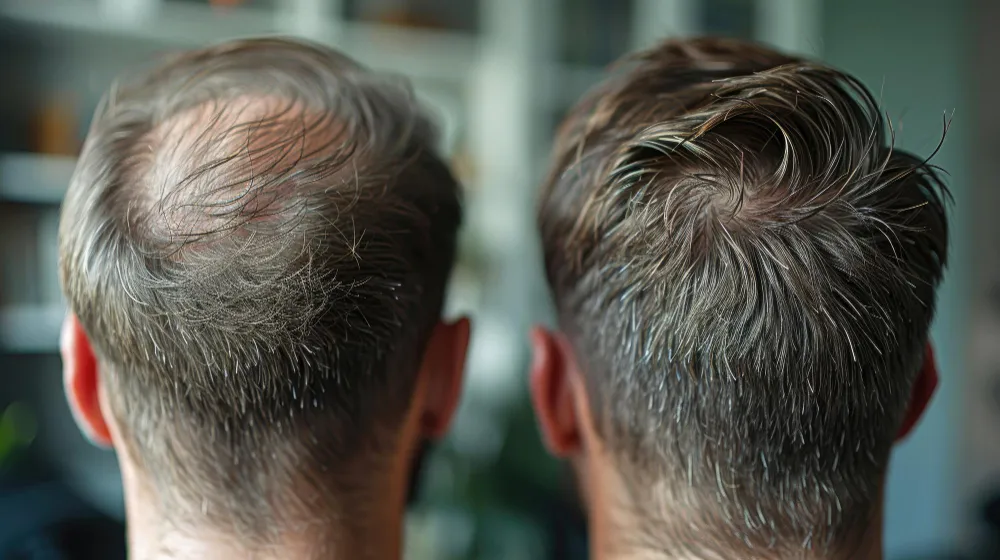

Marketing material tends to jump straight from “surgery day” to “final result” photos, which skips the part patients actually live through. Here’s a realistic breakdown; see our recovery and results guide for the short version plus what’s normal versus what needs a doctor’s attention.
Week 1: Swelling, scabbing, and the hardest sleeping position of your life
Mild to moderate swelling around the forehead and eyes can appear 2–4 days after surgery and typically resolves within a week. Tiny scabs form at each graft site in the recipient area and around the donor zone. Sleeping semi-upright for the first several nights is usually recommended to limit swelling. First gentle washes typically begin under specific clinic instructions, not on your own timeline.
Weeks 2–4: Shedding, the part nobody warns you about enough
This is the stage that alarms first-time patients the most: the transplanted hairs themselves shed. This is expected and does not mean the transplant failed. The hair shaft sheds while the follicle underneath stays alive and enters a resting phase before regrowing. Most or all transplanted hairs will shed by around week 4.
Months 1–3: The “nothing is happening” phase
This is the hardest phase psychologically because visually, very little changes. The follicles are in a dormant (telogen) phase. This is normal and expected; it is not a sign that the procedure isn’t working.
Months 3–6: Regrowth begins
New hair starts emerging from the transplanted follicles, initially finer and sometimes lighter in colour than it will eventually be. Density increases gradually and unevenly; it’s common for some areas to appear ahead of others during this phase.
Months 6–12: Thickening and texture change
Hair shafts thicken and take on more of their natural texture. By month 9–10, most patients have a reasonably clear sense of their eventual result, though further refinement continues.
Months 12–18: Final result
This is generally considered the point at which the result can be fairly evaluated: density, texture, and direction have matured. Some further subtle thickening can continue slightly beyond 18 months in a minority of patients.
The practical takeaway
If you’re comparing your own results to someone else’s 3-month photo online, you’re comparing apples to a very different stage of the timeline. Any honest before/after comparison should specify exactly how many months post-op it represents, and if it doesn’t, that’s worth asking about. See how to read any before/after photo critically for the rest of what to check.